
How can heat be treated by adding fire? An article from the Chengdu University of Chinese Medicine explains the...
Tout
Latest posts
-
 Moxibustion on Yong Quan (KI 1) to guide the fire back to its sourceRead more
 -
 Moxibustion for insomniaRead more
Shi Mian and An Mian 4, two little-known points to warm with a moxa stick in the evening to re-anchor the yang and...
-
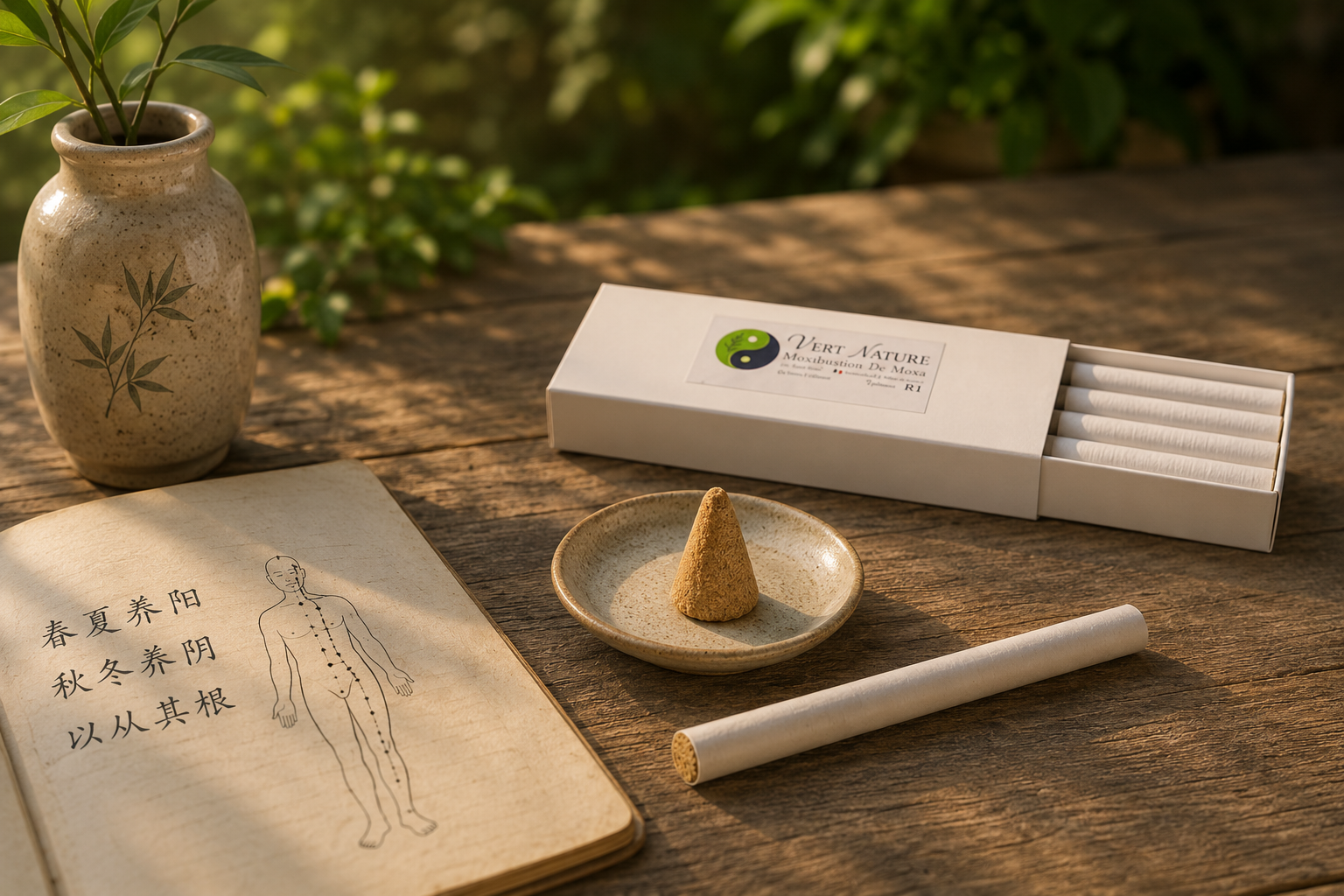 Moxibustion: Summer or Winter, When Should You Really Practise?Read more
As a moxa retailer, I notice a spike in orders every winter — even though the classical texts of Chinese medicine...
-
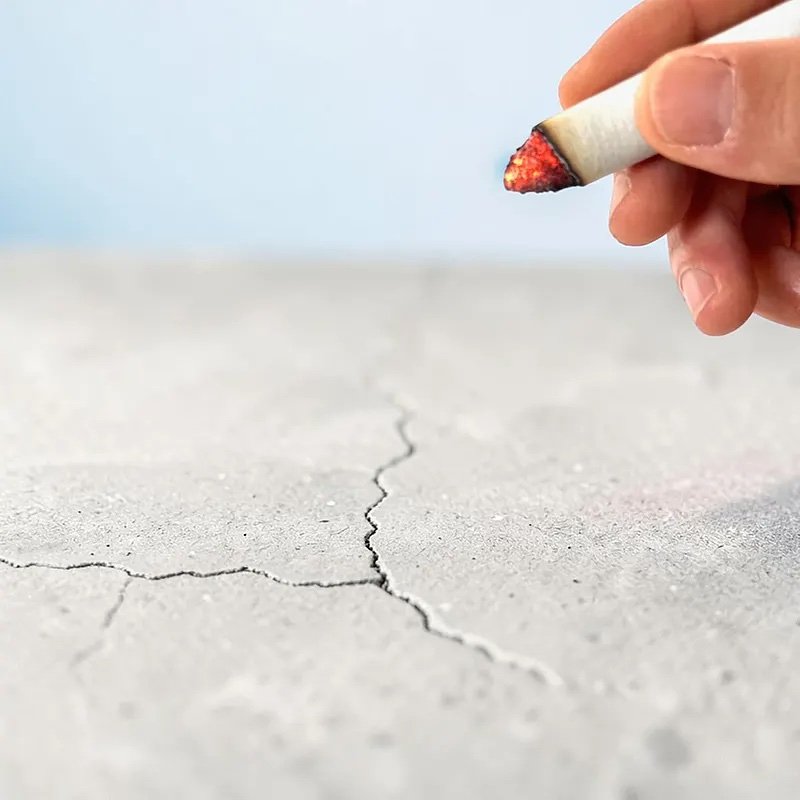 Introduction to moxibustion techniquesRead more
Introduction to moxibustion techniques Moxibustion is practised using several techniques. Some are simple and can be...
-
 Safety of moxa smokeRead more
Moxa smoke: understanding scientific data without confusion Moxibustion involves the combustion of dried mugwort...
-
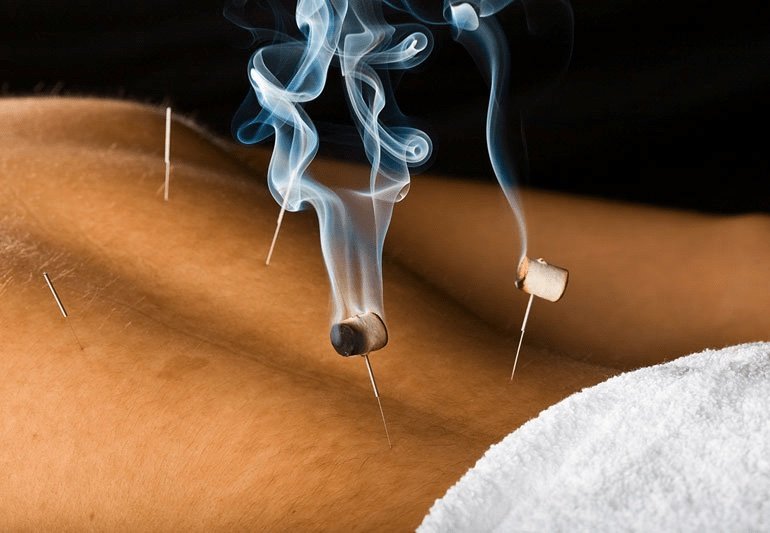 Needle moxibustion: choosing the right equipmentRead more
Needle moxibustion: choosing the right equipment The warm-needle technique (needle moxibustion) rests on a balance...
-
 How to practise moxibustion at homeRead more
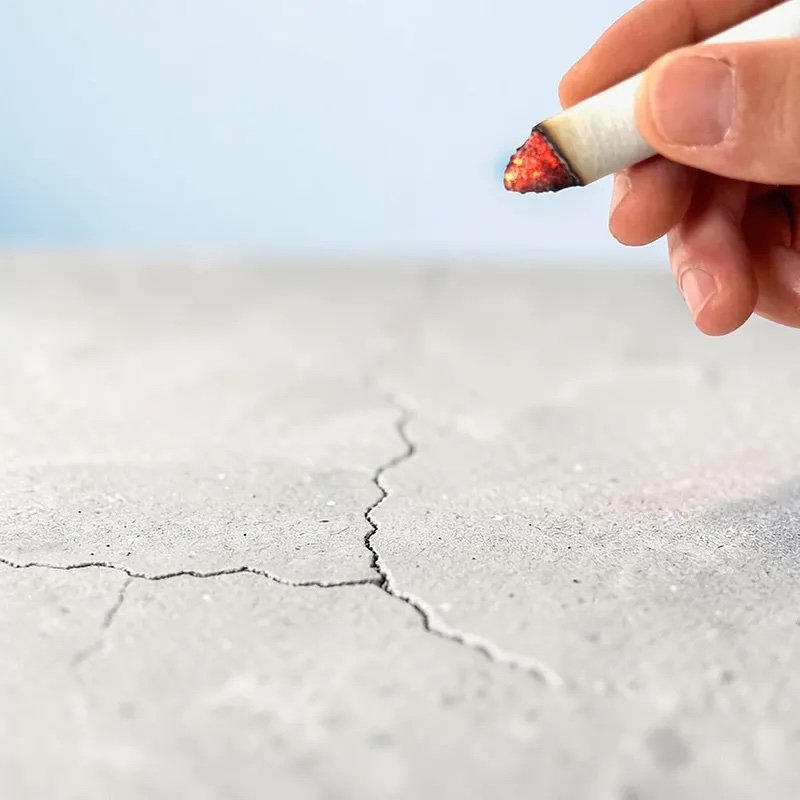
Moxibustion is a technique from Traditional Chinese Medicine (TCM) that involves stimulating precise points on the...
-
 Smokeless moxa: why it is less effective than traditional moxaRead more
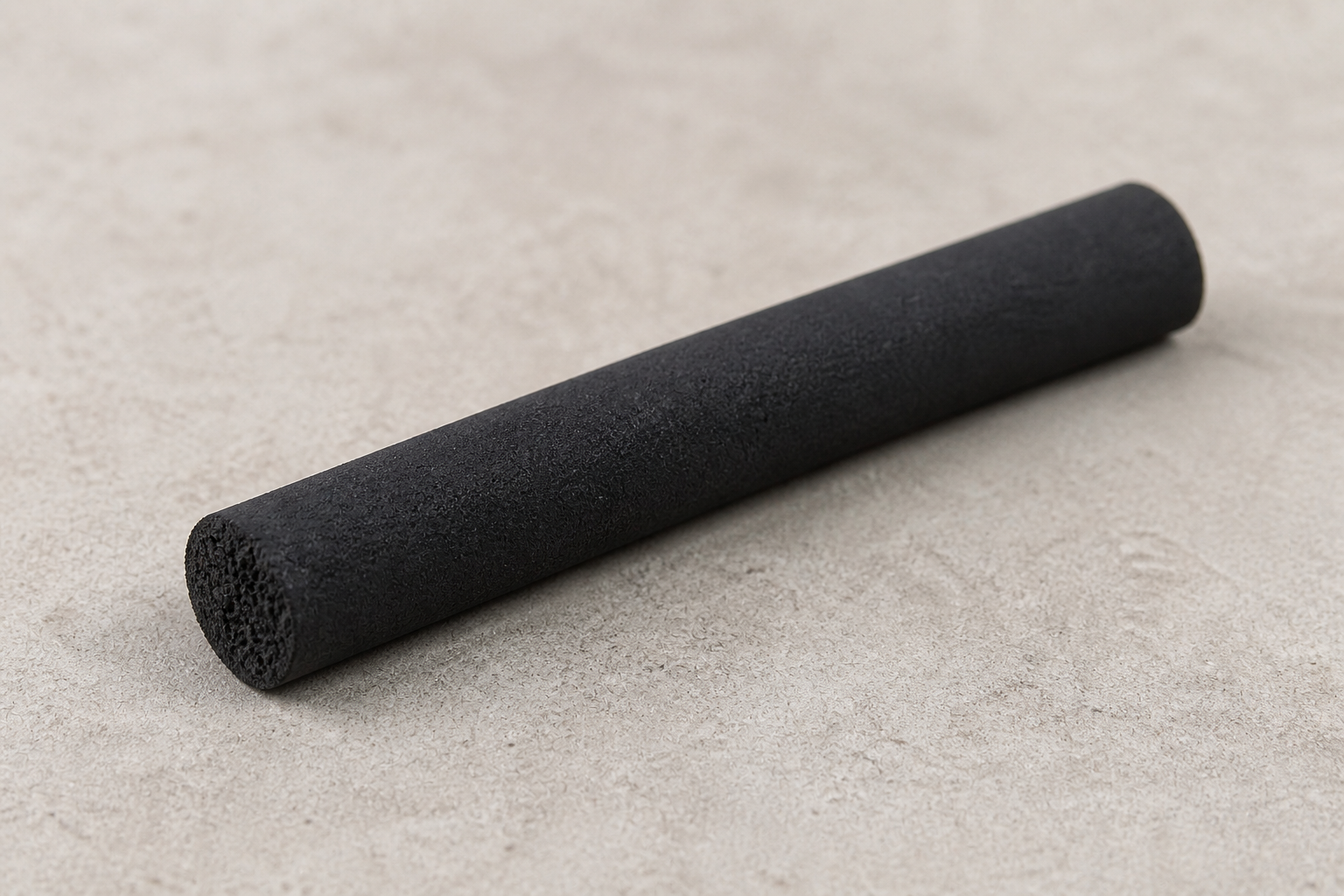
Why we do not recommend smokeless moxa Therapeutic efficacy and a coherent choice Smokeless moxa is today widely...
Blog categories
Search in blog
Archived posts
Safety of moxa smoke
Moxa smoke: understanding scientific data without confusion
Moxibustion involves the combustion of dried mugwort leaves (Artemisia argyi, vulgaris or princeps) to stimulate acupuncture points or specific body areas. This practice has been used for centuries without any historical reports of specific pathologies related to its use.
In recent years, some questions have emerged regarding the smoke produced by moxa. These questions are legitimate, but they are often approached in a theoretical, even decontextualised manner, extrapolating laboratory data to real clinical situations.
The aim of this analysis is precisely to place the scientific results within their concrete application framework, as it exists in clinical practice.
As a moxa manufacturer, we are aware that we cannot claim complete neutrality. Empirical observation alone is obviously insufficient: even if one of our oldest clients, a practitioner of nearly 40 years and an intensive moxa user (approximately 100 rolls per month), presents no health disorders linked to this exposure, this does not constitute scientific proof.
This is why we have undertaken an in-depth research effort, compiling and critically analysing all available studies, in order to provide a documented, verifiable and contextualised basis.
What studies on moxa smoke actually measure
Like all plant combustion (incense, wood, medicinal herbs), that of mugwort generates measurable by-products. Some laboratory studies have identified, under specific experimental conditions, the presence of common organic combustion compounds: benzene, toluene, formaldehyde, polycyclic aromatic hydrocarbons (PAH) and fine particles.
These substances are well known to public health organisations, not because they are specific to moxa, but because they are present in virtually all plant combustion. Their regulatory classification is based on chronic, continuous and often industrial high-level exposures.
It is essential to emphasise a central point: the measured presence of a compound does not automatically mean a real health risk.
The study Characteristics of selected indoor air pollutants from moxibustion (2014), for example, was conducted in closed, unventilated rooms in order to characterise emissions. It was not intended to evaluate clinical effects in humans, and its results cannot be directly transposed to the real conditions of a ventilated treatment room.
Theoretical exposure vs. real clinical exposure
In daily practice, a moxibustion session is accompanied or followed by natural or mechanical ventilation. These conditions lead to rapid dilution of the measured compounds, far removed from the continuous scenarios used to establish regulatory thresholds.
The most comprehensive studies did not stop at simple pollutant measurement: they assessed the actual impact on health, which is fundamental.
What large-scale human data show: A massive epidemiological survey, 803 chronically exposed acupuncturists
The most comprehensive study to date is " Does Moxa Smoke Have Significant Effect on the Acupuncturist's Respiratory System? A Population-Based Study ". It is based on a cross-sectional survey of 803 Chinese acupuncturists practising moxibustion daily (cumulative exposure >10 years for the majority). Tools include a medical questionnaire for respiratory symptoms (cough, expectoration, breathlessness, rhinitis) and spirometry for pulmonary function.
Key results:
- Reported symptoms show no significant correlation with moxa exposure (p>0.05 via multivariate logistic regression).
- Pulmonary function: No statistically significant difference between exposed and non-exposed (p=0.12 for FEV1; even slight improvements in the exposed, potentially due to selection bias – acupuncturists are often more attentive to their health).
- Predictive factors: Smoking (OR=2.8), male sex (OR=1.5) and allergic history (OR=3.2) account for 70–80% of variances, versus less than 10% for moxa exposure.
The authors' conclusion is that moxa smoke has no significant effect on the respiratory health of acupuncturists, even after prolonged exposure.
This study, with its massive sample and rigorous controls, is the most representative of real clinical conditions.
Animal models: effects only at unrealistic doses
The study "Lung Function Decline after 24 Weeks of Moxa Smoke Exposure in Rats" exposed 28 rats to moxa smoke 6 days per week over 24 weeks. Doses were graded: 0 mg/m³ (control), low (27 mg/m³ PM), medium (169 mg/m³) and high (385 mg/m³). Measurement was by spirometry.
Results:
- At the low dose (27 mg/m³, already 8 times the clinical average of 3.5 mg/m³), no pulmonary impairment was reported (p>0.05).
- Deleterious effects appeared only at medium/high doses – 50 to 110 times levels in a well-ventilated practice room.
Consequently, when pulmonary alterations appear, they occur at smoke concentrations 50 to 110 times higher than those encountered in a properly ventilated practice room.
Paracelsus would have concluded: "Everything is poison, nothing is poison. It is the dose that makes the poison."
The decisive role of moxa quality
A point often overlooked in debates is the considerable variability between moxas. Most studies do not specify the origin of the mugwort, nor the harvesting, drying or ageing methods.
Yet these parameters directly influence:
- combustion stability,
- the proportion of volatile compounds,
- and therefore the smoke profile produced.
The composition of moxa is not fixed: it depends on the plant, the time of harvest, drying and storage. These factors influence not only therapeutic efficacy (penetrating heat, local stimulation), but also the emission profile during combustion.
Recent data show that wild mugwort, harvested at the summer solstice, slowly dried in the shade and aged, has a more stable aromatic profile and more regular combustion, further limiting potentially irritating emissions.
Optimising moxa quality: Harvesting, drying and ageing to minimise risks
Wild mugwort: a clear advantage
A study reports that wild mugwort contains fewer volatile organic compounds (terpenes, aldehydes) than varieties cultivated on plains, while being richer in flavonoids and antioxidant phenolic acids (Wang et al., 2023)
Its combustion will therefore be cleaner and release fewer compounds.
The ideal harvest time: June, at the summer solstice
Harvesting at the summer solstice (mid-June) may appear to be a custom. A recent metabolomic study by Chen et al. (2024)¹⁰ A Comprehensive Metabolomic Analysis of Volatile and Non-Volatile Compounds in Folium Artemisia argyi Tea from Different Harvest Times analyses the volatile and non-volatile profiles of Artemisia argyi leaves harvested from March to June.
Results:
June optimises the aromatic and antioxidant quality of mugwort, ideal for functional applications such as tea and, by extension, therapeutic moxa.
Harvesting in June at the solstice captures maximum metabolic accumulation, potentially reducing incomplete volatile organic compounds during combustion.
Drying and ageing: Preserving for clean combustion
Although comparative studies on specific drying methods for common mugwort are non-existent, studies on medicinal herbs show that oven drying (>60°C) increases oxidised aldehydes (Calín-Sánchez et al., 2020) . Natural shade drying as we practise it will therefore avoid this problem.
Ageing
It softens combustion, reducing pollutant peaks (Wang et al., 2023) . However, given the study cited above regarding the composition of wild mugwort, the need for ageing will be less important.
By integrating these steps – June harvest, shade drying, ageing – our artisan moxa accumulates the advantages for smoke minimal in irritants.
About paper
Paper is another source of emission during combustion. It is therefore important to ensure its composition and origin. In almost all photos of practitioners, we see them burning the first layer of paper, the printed one. This is a completely unnecessary practice given that there is another layer of paper underneath that holds the mugwort. This paper, and even more so the ink on it, very likely emits toxic compounds.
The question does not arise for us: we use only one layer of paper. The paper used for our moxa sticks is supplied by a French paper mill located in the Alps, recognised for its expertise in the manufacture of fine and technical papers for over a century. It is made from selected plant fibres.
About moxa colour: avoiding misconceptions
The colour of moxa is often interpreted in a simplistic manner. A very yellow moxa can result either from fine manual processing, or... from aggressive oven drying, which degrades chlorophyll.
Conversely, naturally shade-dried moxa retains a greener tint, which is not a defect. Colour alone is never a reliable criterion for quality or safety.
Conclusion – A safe practice when properly understood
The available scientific data converges towards a clear conclusion: moxa smoke, under the real conditions of clinical practice, presents no demonstrated health risk.
The pollutants measured fall within theoretical considerations arising from experimental models, but do not translate into measurable effects on human health when moxibustion is practised with simple ventilation and quality moxa.
Of course, if you practise in a booth-style room with no ventilation at all, you should avoid all combustion (including smokeless moxa) while waiting to find a solution.
Suction solutions exist, including solutions with no external discharge. They require the use of charcoal filters.
By favouring wild mugwort, harvested at the right time, naturally dried and properly aged, it is possible to further reduce these theoretical emissions while optimising therapeutic efficacy.
As with wine, time does not transform mediocre raw material into a grand cru. Quality begins in the field, not in storage.
References
- Characteristics of selected indoor air pollutants from moxibustion
https://pubmed.ncbi.nlm.nih.gov/24548885/
- Does Moxa Smoke Have Significant Effect on the Acupuncturist's Respiratory System? A Population-Based Study https://pmc.ncbi.nlm.nih.gov/articles/PMC6766099/
- Lung Function Decline after 24 Weeks of Moxa Smoke Exposure in Rats
https://pubmed.ncbi.nlm.nih.gov/30755777/
- PM10 mass concentration and oxidative capacity of moxa smoke
https://pubmed.ncbi.nlm.nih.gov/25616400/
- PM2.5 and ash residue from combustion of moxa floss
https://pubmed.ncbi.nlm.nih.gov/26516134/
- Comparison of growth and quality of wild and cultivated Artemisia stolonifera
https://pubmed.ncbi.nlm.nih.gov/37475063/
- A review of drying methods for improving the quality of dried herbs
https://www.tandfonline.com/doi/full/10.1080/10408398.2020.1765309
- Quality of moxa from Artemisia argyi and A. stolonifera in different storage years based on simultaneous thermal analysis
https://pubmed.ncbi.nlm.nih.gov/37475060/
- A Comprehensive Metabolomic Analysis of Volatile and Non-Volatile Compounds in Folium Artemisia argyi Tea from Different Harvest Times
https://pmc.ncbi.nlm.nih.gov/articles/PMC11899400/
Japan Society of Acupuncture and Moxibustion (JSAM). Guidelines, 2022
https://jsam.jp/en/guidelines/
Posted in:
Choisir son moxa
Related posts
-
Smokeless moxa: why it is less effective than traditional moxa
Why we do not recommend smokeless moxa Therapeutic efficacy and a coherent choice Smokeless moxa is today widely...Read more
Leave a comment