How can heat be treated by adding fire? An article from the Chengdu University of Chinese Medicine explains the...
Tout
Latest posts
-
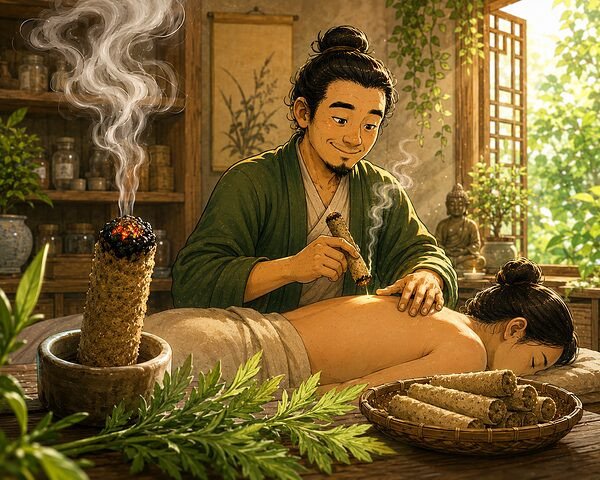 Moxibustion on Yong Quan (KI 1) to guide the fire back to its sourceRead more
 -
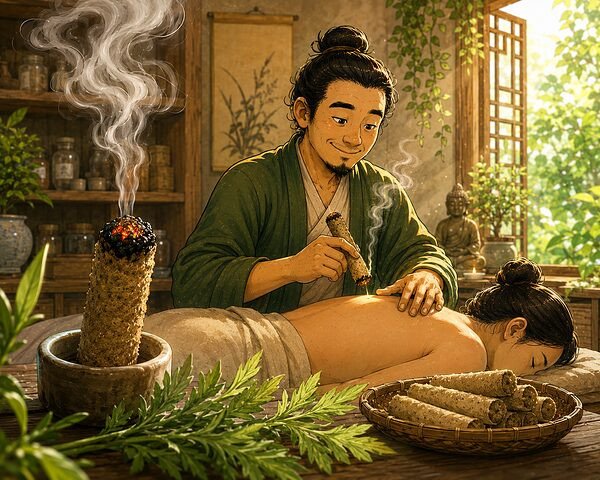 Moxibustion for insomniaRead more
Shi Mian and An Mian 4, two little-known points to warm with a moxa stick in the evening to re-anchor the yang and...
-
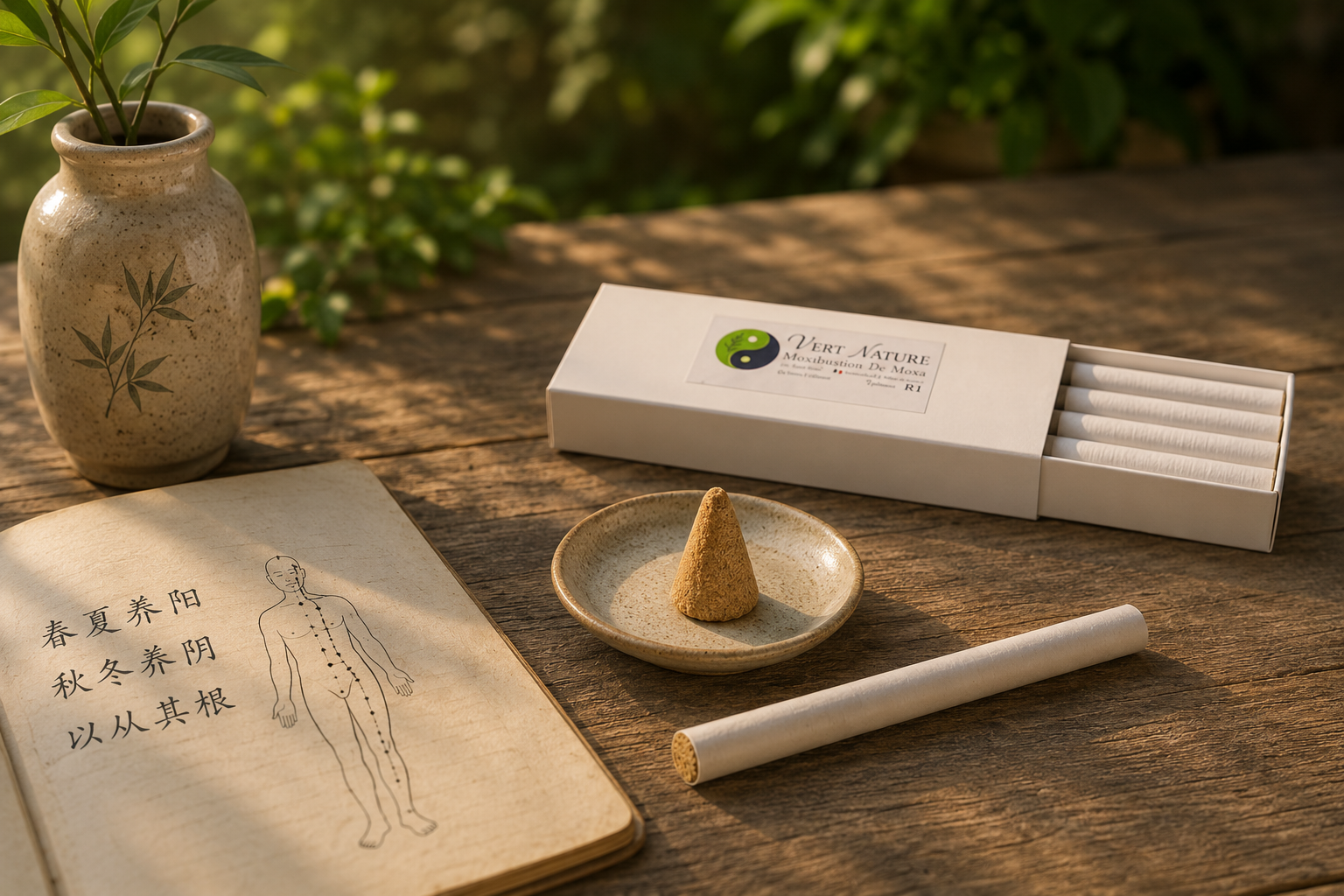 Moxibustion: Summer or Winter, When Should You Really Practise?Read more
As a moxa retailer, I notice a spike in orders every winter — even though the classical texts of Chinese medicine...
-
 Introduction to moxibustion techniquesRead more
Introduction to moxibustion techniques Moxibustion is practised using several techniques. Some are simple and can be...
-
 Safety of moxa smokeRead more
Moxa smoke: understanding scientific data without confusion Moxibustion involves the combustion of dried mugwort...
-
 Needle moxibustion: choosing the right equipmentRead more
Needle moxibustion: choosing the right equipment The warm-needle technique (needle moxibustion) rests on a balance...
-
 How to practise moxibustion at homeRead more
Moxibustion is a technique from Traditional Chinese Medicine (TCM) that involves stimulating precise points on the...
-
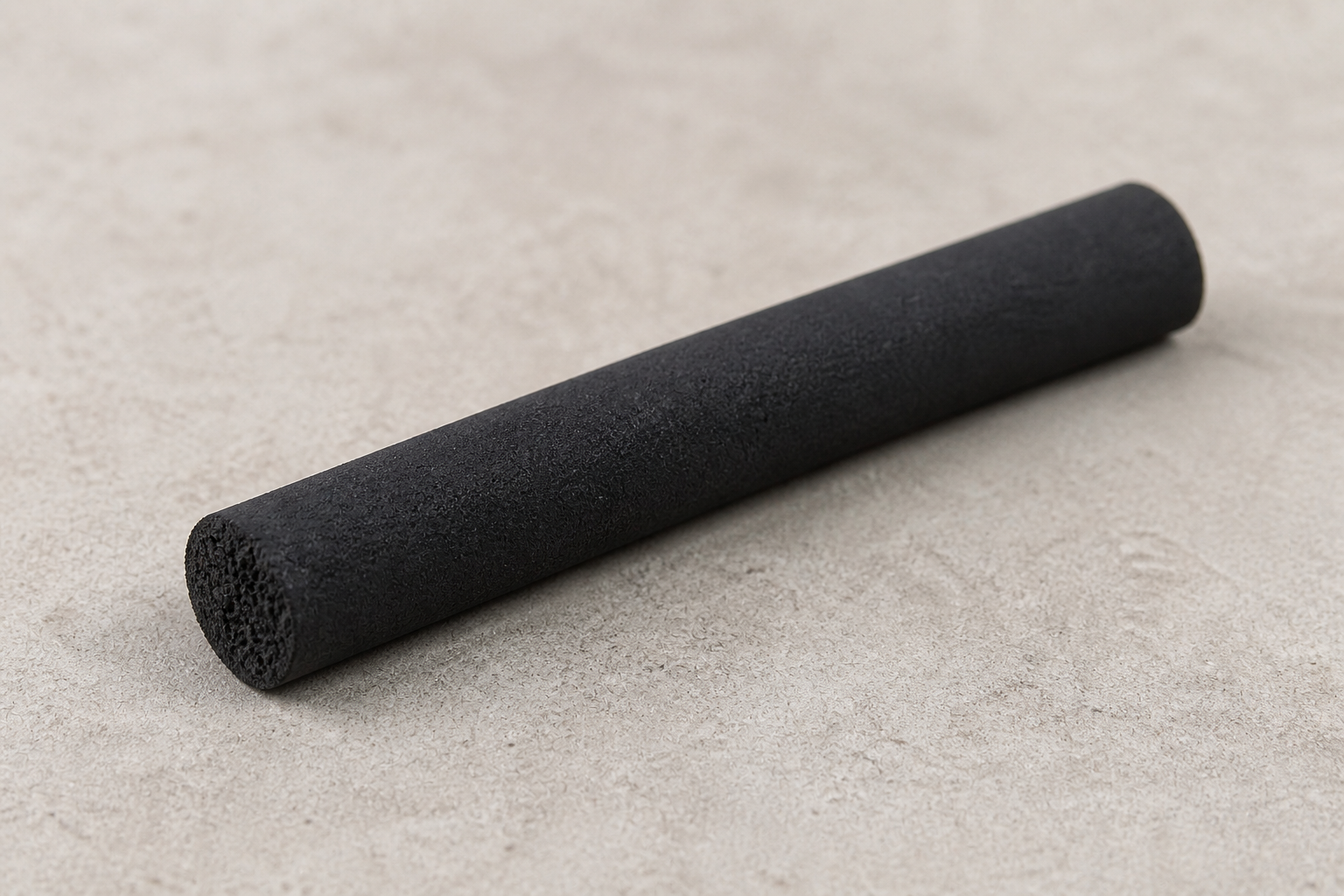 Smokeless moxa: why it is less effective than traditional moxaRead more
Why we do not recommend smokeless moxa Therapeutic efficacy and a coherent choice Smokeless moxa is today widely...
Blog categories
Search in blog
Archived posts
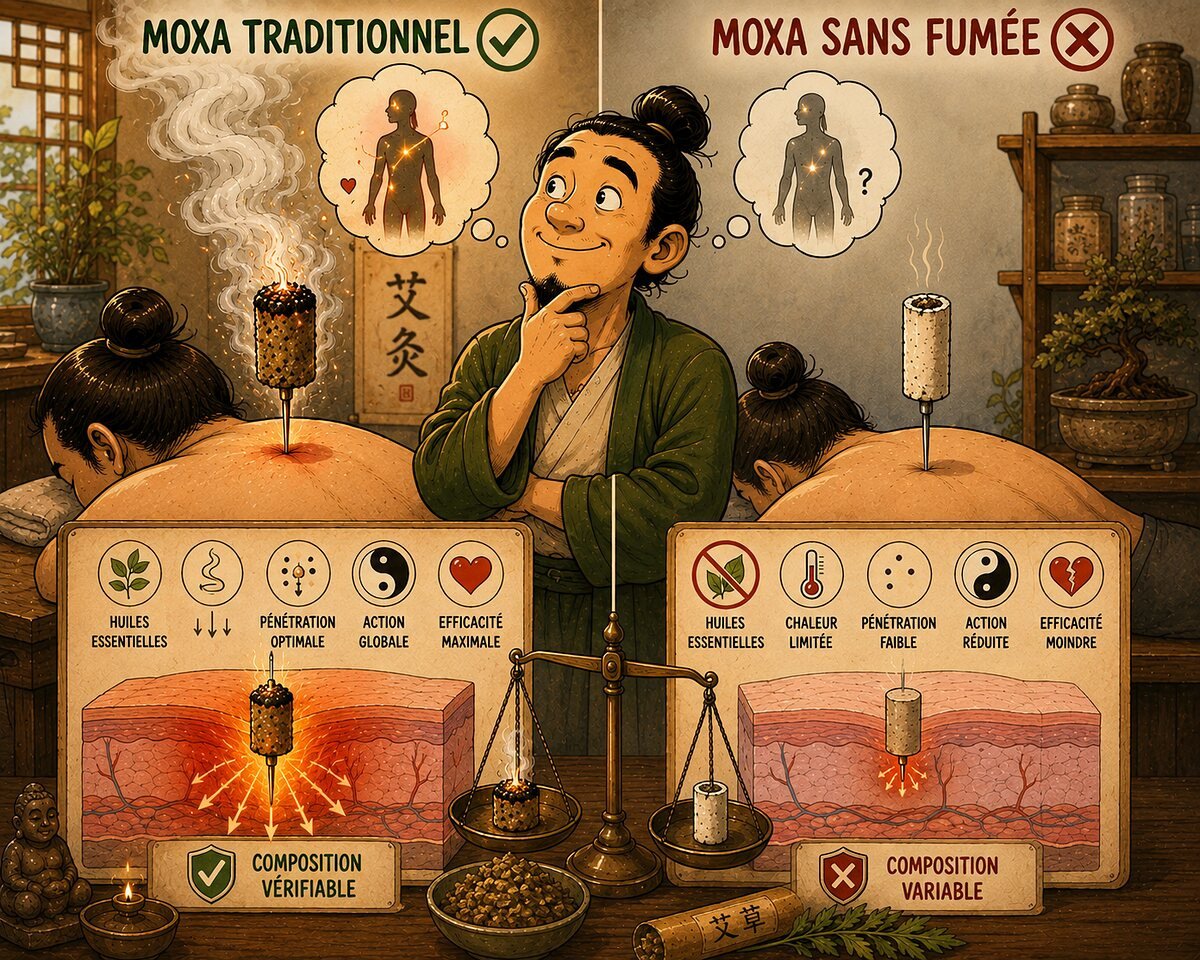
Smokeless moxa: why it is less effective than traditional moxa
Why we do not recommend smokeless moxa
Therapeutic efficacy and a coherent choice
Smokeless moxa is today widely presented as a modern alternative to traditional moxa: cleaner, more comfortable and supposedly therapeutically equivalent. At Vert Nature, we have made a clear and deliberate choice: we do not offer smokeless moxa.
This choice is neither ideological, nor nostalgic, nor archaic. It rests on a rigorous analysis of the real mechanisms of moxibustion, on clinical experience, on traditional Chinese teaching and on the study of recent scientific publications. Indeed, based on these data, it is undeniable that smokeless moxa cannot possess the same physical properties nor have the same therapeutic scope as traditional moxa.
Moxibustion is not simply the application of heat
Reducing moxibustion to a simple thermal input is an excessive oversimplification. If heat were the only determining factor, it is obvious that any heat source could replace moxa.
In reality, the efficacy of moxibustion rests on three distinct and measurable physical phenomena:
- the heat produced by combustion,
- electromagnetic radiation, primarily in the near-infrared range,
- volatile substances, notably the essential oils released by the combustion of mugwort.
These three dimensions act in a complementary manner and contribute to the overall therapeutic effect.
It is also clear that other more subtle phenomena, not demonstrable by our scientific tools, also intervene. We will speak of the Qi of Mugwort...
A profoundly different electromagnetic radiation
Studies have shown that traditional moxa emits infrared radiation of a specific wavelength, particularly effective at penetrating deeply into tissues.
Smokeless moxa, for its part, presents a very different electromagnetic radiation:
- the emitted wavelength is not identical,
- the radiation intensity is approximately one thousand times lower (1000 times!) than that of traditional moxa.
Heat is indeed perceived at the surface, but the radiation useful for deep action is greatly diminished.
The disappearance of essential oils
Smokeless moxa is obtained through a pyrolysis process: the mugwort is carbonised in a low-oxygen environment. This process causes the evaporation and destruction of virtually all the essential oils naturally contained in the plant.
Yet these aromatic compounds are an integral part of the therapeutic action of traditional moxa. Their absence reduces moxibustion to an incomplete thermal stimulation.
Furthermore, the manufacture of smokeless moxa sticks requires the addition of binders to maintain mechanical cohesion. The exact nature of these binders and the substances they release upon combustion are rarely detailed, which raises the question of their actual harmlessness.
Smoke: a modern constraint, a traditional therapeutic component
Moxa smoke is often perceived as a nuisance. In the Chinese tradition, it is on the contrary considered to be an integral part of the treatment.
It carries a portion of the active substances from combustion and participates in the overall dynamic of the care. It is notably for this reason that, including in modern Chinese hospitals, traditional moxa remains predominantly used.
A subtle dimension inseparable from moxibustion
Beyond strictly physical phenomena, moxibustion also acts on a more subtle level, long recognised by Chinese Medicine. The combustion of moxa does not produce only heat: it generates an upward movement, a diffusion and a quality of presence comparable to those of incense.
In classical texts, moxa smoke is described as having the capacity to "open the orifices". This notion does not refer solely to a respiratory action, but to a functional opening: clarification of the Shen, stimulation of perception and facilitation of the circulation of Qi between the interior and exterior.
Smoke thus acts as a vector connecting heaven and earth: heat anchors, combustion mobilises, smoke elevates. This tripartite dynamic participates in the global effect of the treatment and cannot be dissociated from the therapeutic gesture itself.
In smokeless moxa, this dimension is absent or greatly attenuated. Even if heat is produced, the loss of the upward movement, volatile substances and functional symbolism of smoke profoundly modifies the nature of the care.
Tradition, efficacy and therapeutic coherence
Chinese Medicine is based on more than two thousand years of clinical observations. The carbonisation processes of plants have been known for a long time and are widely used in pharmacopoeia.
If smokeless moxa possessed equivalent efficacy, it would naturally have found its place in traditional practice just as electro-acupuncture has, for example. Its recent development primarily responds to imperatives of comfort and speed, at the cost of significant therapeutic concessions.
Conclusion
Smokeless moxa heats the body. It is not part of the treatments used in the great institutes of Chinese Medicine. Traditional moxa, on the other hand, acts in a more complete manner, combining heat, specific infrared radiation, active plant substances and the subtle dimension of the combustion process.
At Vert Nature, we have made the choice of therapeutic coherence. This is why we use and offer exclusively traditional moxa, faithful to the spirit and efficacy of authentic moxibustion.
Sources
- An Infrared Radiation Study of the Biophysical Characteristics of Moxibustion – Study of the infrared radiation characteristics in moxibustion.
- The Mechanism of Moxibustion: Ancient Theory and Modern Research – Ancient and modern mechanisms of moxibustion.
- Clinical Efficacy of Smoking versus Smokeless Moxibustion and the Role of Products of Mugwort Smoke – Comparative clinical efficacy of smoking and smokeless moxa.
Posted in:
Choisir son moxa
Related posts
-
Safety of moxa smoke
Moxa smoke: understanding scientific data without confusion Moxibustion involves the combustion of dried mugwort...Read more
Leave a comment