Vert Nature has been the only European producer of moxa since 1985. From the picking of wild mugwort in Occitanie through to the moment the product goes on sale, every stage takes place in France, in our own workshops. This page explains how we work, and why we made these choices.
From wild common mugwort to moxa
From picking through to sale, we control every stage. This guarantees complete and transparent traceability: you know the precise origin of each product.
This complete control is what sets us apart from industrial supply chains, where mugwort changes hands several times between the field and the finished roll, without anyone involved really knowing the history of the raw material.
Discover our story to find out more about the company.
The harvest
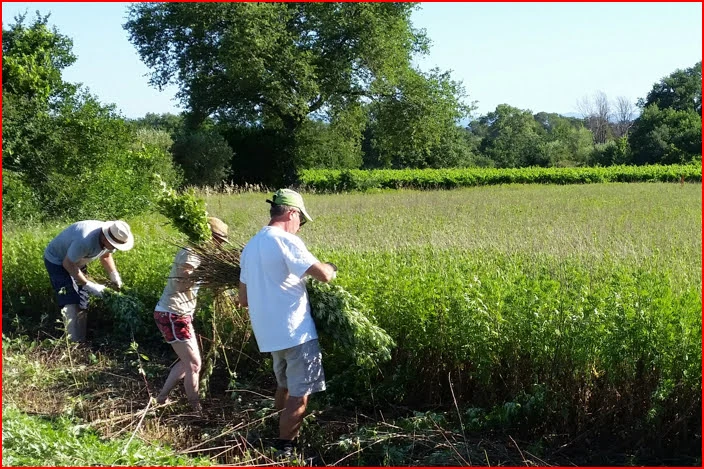
Our mugwort comes from a respectful wild harvest: grown without fertilisers or pesticides, it thrives in preserved areas recognised as “pesticide-free villages”. We pick it by hand at the summer solstice, following the solar cycle and the “leaf” days of the lunar calendar, as the druids once did.
That date is anything but arbitrary. The solstice is the moment when sunshine is at its peak and when, according to tradition, the plant holds the highest concentration of its active principle. That is what gives our moxa its invigorating character.
Our harvests are carried out with permits issued by the bodies managing public land, or with the agreement of private owners.
Once cut, the mugwort is gathered into bunches and hung upside down in a naturally ventilated drying room, to be energised as fully as possible.
In contrast to Asian industrial methods – intensive cultivation, mechanical harvesting, no sorting, phenol treatment and kiln drying – we favour an artisanal and respectful approach.
Making the moxa
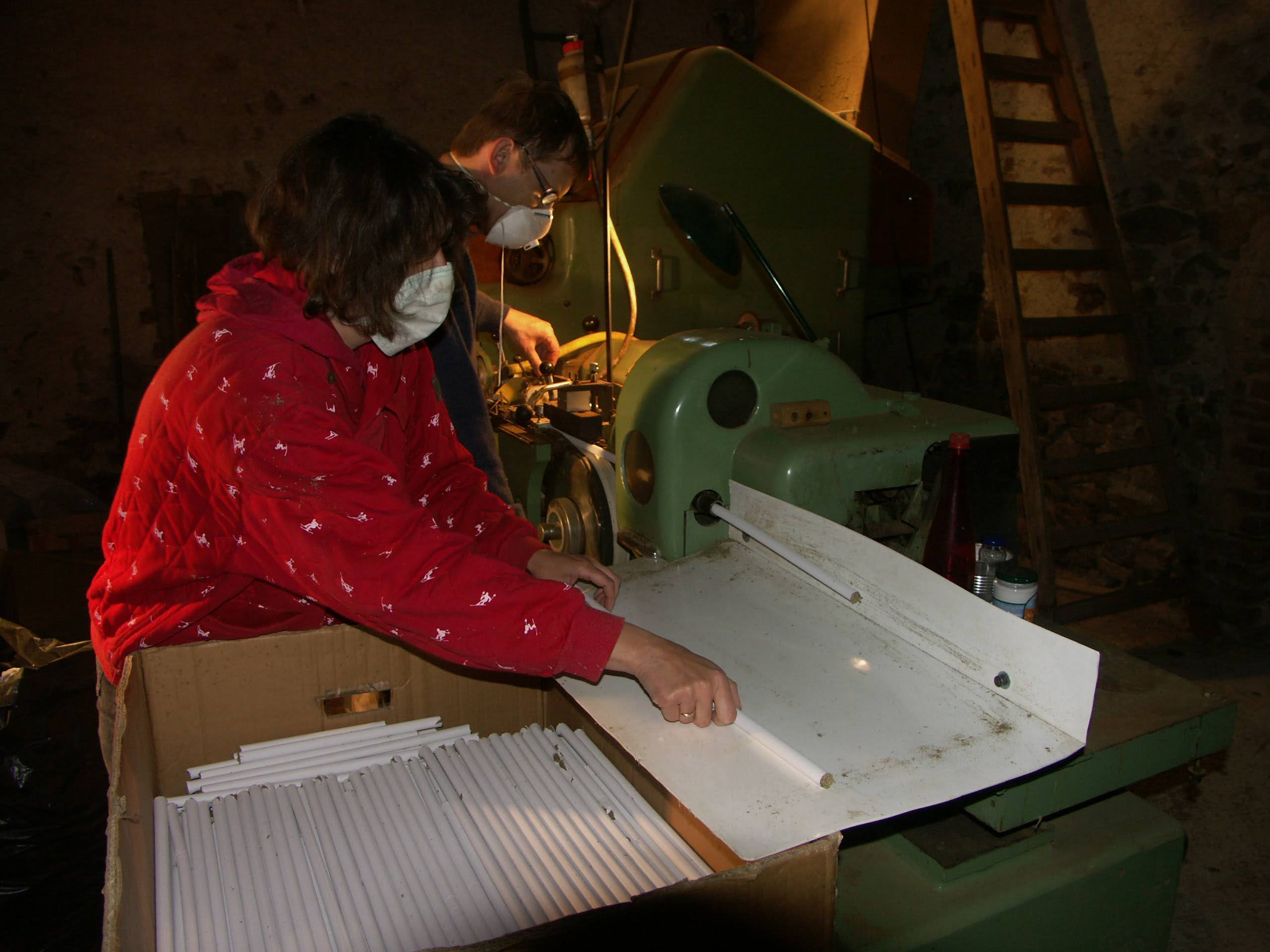
Once dried, the mugwort is carefully stripped of its leaves mechanically, then ground and shaped into rolls in our workshop.
These rolls, known as “moxa”, are wrapped in a single layer of very thin paper, which ensures an even and controlled burn. The word “moxa” comes from the Japanese moguza, meaning “prolonged fire”.
The paper is supplied by a French paper mill in the Alps, renowned for more than a century for its expertise in fine technical papers. It is made from selected plant fibres, from certified wood pulp or sustainable plant fibres, and is characterised by a low basis weight and controlled porosity.
The assembly is done with a food-grade glue used in very small quantities: enough to hold the roll together, never enough to affect the burn or produce an unwanted smell.
It is these choices – exclusive selection of the leaves, fine paper, food-grade glue – that place our sticks in the superior quality grade of moxa.
Low-smoke moxa
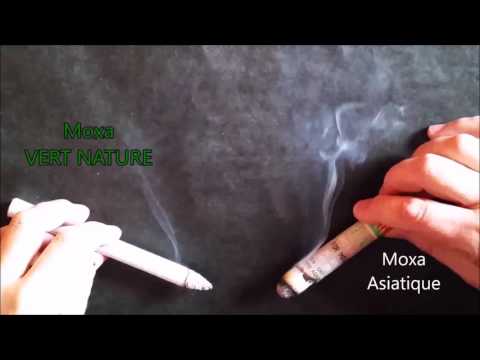
Vert Nature moxa produces far less smoke, thanks to meticulous sorting of the mugwort, rigorous selection and natural drying.
The difference lies in what we leave out of the roll. Many imported products include parts of the plant other than the leaves, or even additional components, and are dried artificially. We use the leaf alone, dried in the open air.
The result is a more pleasant experience, better tolerated in the treatment room, and kinder to the environment.
Click the image to watch the comparison video.
Loose moxa and the Lux range
Alongside the sticks, we produce loose moxa, obtained by grinding the mugwort leaves and then sifting them several times. This sifting gradually isolates the trichomes, the fine white down found on the underside of the leaf. The further the refining goes, the lighter, purer and more subtle the fibre becomes.
The Lux range draws on the symbolism of traditional alchemy. In the old treatises, the transformation of matter is described as a gradual process of purification called the Magnum Opus, the Great Work: through successive stages, raw matter is clarified until it reaches a state of completion symbolised by gold. Preparing moxa follows exactly this logic.
- Lux Prima (1 leaf) – the first light, evoking the prima materia, the original matter.
- Lux Aurora (4 leaves) – the light of dawn, where the elements begin to fall into order.
- Lux Alba (5 leaves) – the white light, a symbol of purification.
- Lux Aurea (7 leaves) – the golden light, the purest state of matter.
The number of mugwort leaves shown on the packaging indicates the level of refinement, in place of the stars used in the Japanese classification. It too keeps a symbolic dimension: 1 for the original unity, 4 for the fundamental elements, 5 for the quintessence, 7 for the completion of the work. The 4-leaf and 5-leaf levels correspond roughly to the Japanese 4-star and 5-star moxa, with a slightly higher degree of purification.
Which moxa for which use?
| Quality | Moxa boxes | Cones | Heated needle | Ontake | Japanese moxibustion |
|---|---|---|---|---|---|
| Lux Prima 🌿 | ✔✔ | ✔✔ | |||
| Lux Aurora 🌿🌿🌿🌿 | ✔ | ✔✔ | |||
| Lux Alba 🌿🌿🌿🌿🌿 | ✔ | ✔✔ | |||
| Lux Aurea 🌿🌿🌿🌿🌿🌿🌿 | ✔✔ |
✔ possible use ✔✔ particularly suitable
Loose moxa contains no paper at all: the mugwort burns directly, which gives off a milder smell. It is particularly recommended for deep treatments and chronic conditions, when the heat needs to penetrate the tissues over a long period.
Handcrafted wooden accessories
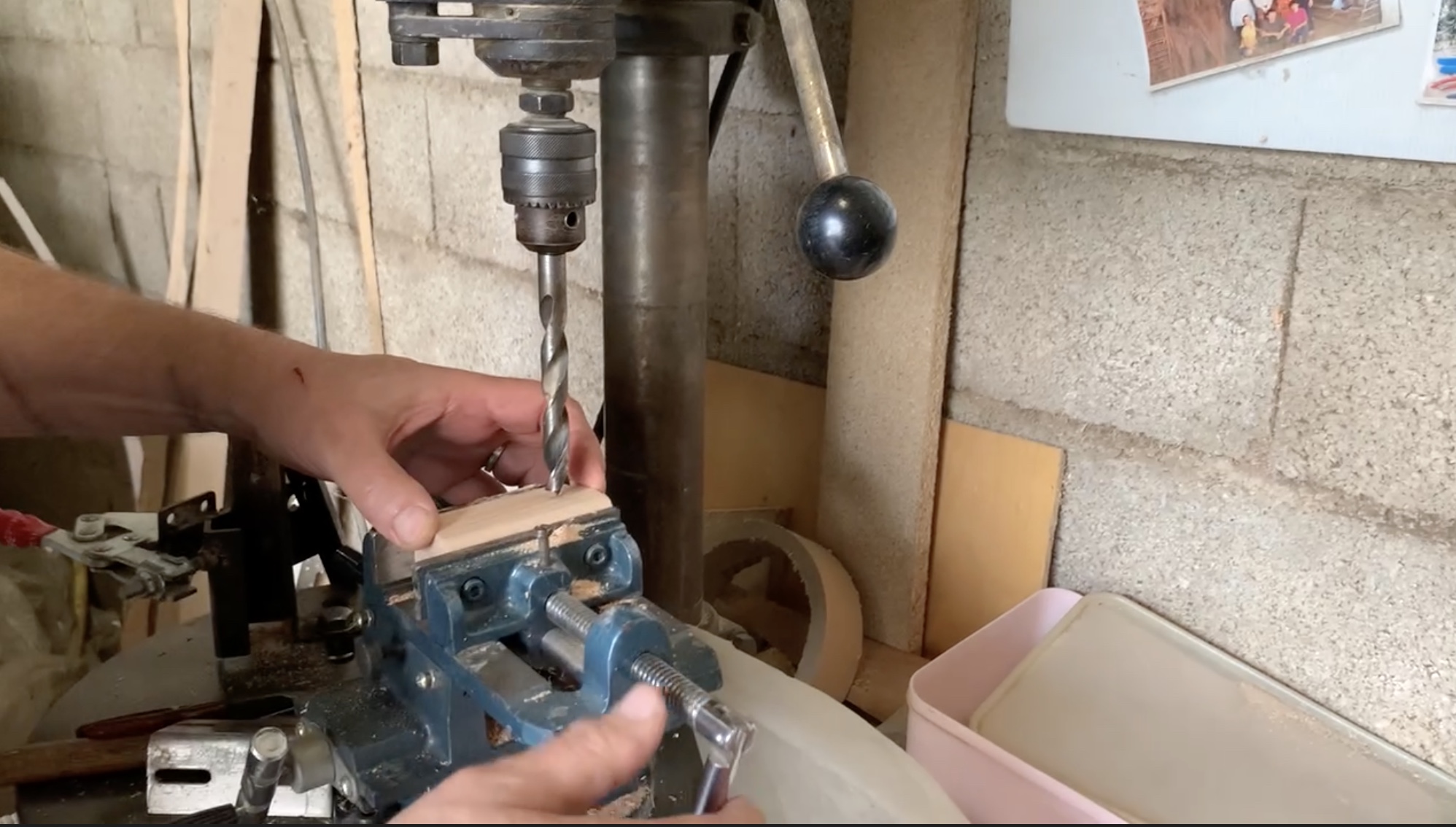
All our wooden accessories are made in our workshops from whole boards of raw beech, without glue or additives.
Our supplier, committed to a responsible approach, provides us with wood coming mainly from French and European forests. Its sustainability is ensured by strict regulations and certifications guaranteeing sound forest management, respect for biodiversity and for social functions.
Each piece reflects the quality of craftsmanship: the appearance may vary and some accessories show small imperfections, but that is precisely the charm of handmade work.
The bamboo of the Ontake tubes
The same standards apply to the bamboo of our Ontake tubes. It grows in France, in Occitanie, and it is cut in areas where there is no risk of contamination by pollutants or pesticides.
We treat it by heat alone. This process, inspired by traditional methods, strengthens the bamboo and improves the way heat spreads, without any chemical product at any stage. The tube stays safe for the practitioner and for the person being treated, and the short supply chain reduces the carbon footprint.
A practice recognised by UNESCO
Moxibustion, an ancestral practice from Traditional Chinese Medicine, was added in 2010 to the UNESCO Representative List of the Intangible Cultural Heritage of Humanity. This international recognition underlines the cultural, historical and therapeutic value of a technique thousands of years old, which consists of stimulating acupuncture points by burning dried and ground mugwort.
Working within this tradition commits us. That is why we refuse industrial shortcuts: a plant grown intensively, kiln-dried and treated with phenols does not produce the same moxa, whatever the appearances.
Our commitments in brief
Wild harvest
Mugwort picked by hand at the summer solstice, without fertilisers or pesticides, in preserved areas.
Everything made in France
Picking, drying, grinding, shaping and packing: every stage in our own workshops.
No chemical treatment
Not on the plant, not on the wood, not on the bamboo. Natural drying, heat treatment alone.
Full traceability
We know the origin of every batch, from the picking site to the finished product.
The only European producer
Continuous activity since 1985, in a sector otherwise entirely based on imports.
Short supply chains
French paper mill, wood from French and European forests, bamboo from Occitanie.